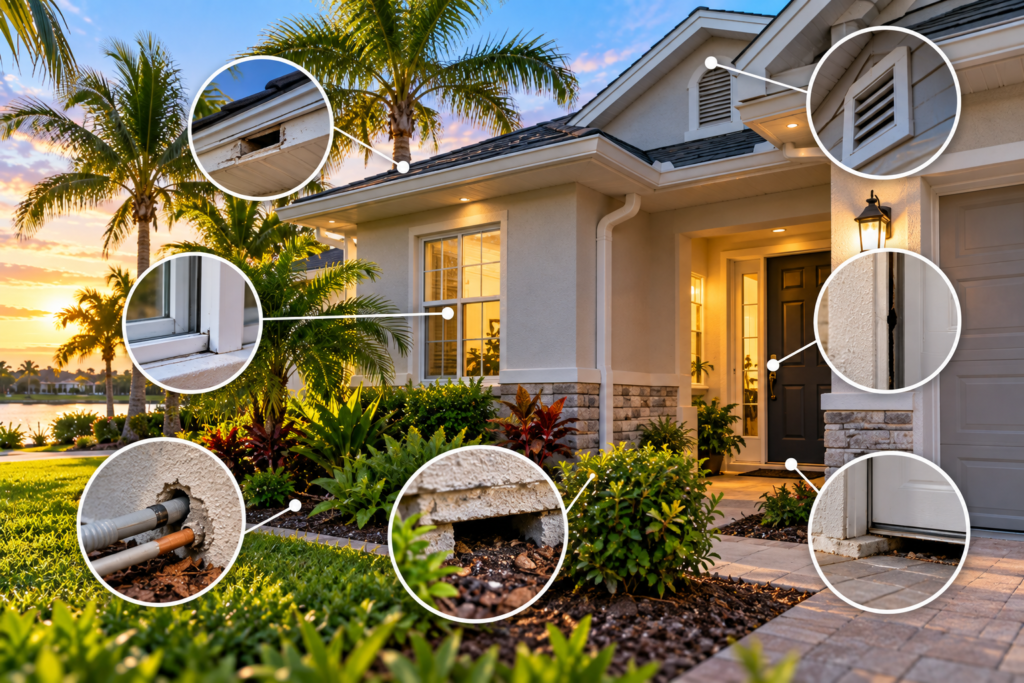
Florida properties face year-round pest pressure because heat, humidity, rainfall, irrigated lawns, and dense landscaping create favorable conditions close to homes and businesses. Ants, beetles, cockroaches, earwigs, flies, mosquitoes, rodents, snakes, spiders, ticks, fleas, and wasps may all take advantage of openings that lead indoors.
Effective pest control starts by identifying where pests are entering rather than reacting only after they appear inside. Doors, windows, utility lines, roof gaps, vents, foundations, and landscaping can all create access routes. A professional inspection helps connect indoor sightings with exterior conditions so the source can be addressed before activity spreads.
Doors, Windows, And Utility Openings Create Easy Access
Many pest entry points are surprisingly small. Ants and cockroaches can move through narrow cracks, while rodents may exploit gaps around doors, vents, or utility penetrations. Florida weather can also wear down seals and building materials over time.
Professionals often inspect:
- Door sweeps that no longer sit tightly against thresholds
- Window frames with damaged screens or loose weatherstripping
- Gaps around plumbing, electrical lines, and air-conditioning connections
- Cracks along foundations, walls, and slab edges
- Garage doors with worn seals or uneven contact points
- Vents and exterior openings without secure screening
Even when a property looks well maintained, moisture and heat can make these routes more attractive. Once pests locate dependable access, repeated indoor activity may follow.
The same principle applies outdoors. Guidance on yard pest pressure shows how standing water, overgrown vegetation, clutter, and damp landscaping can increase activity near the building. Reducing those conditions can make entry points less likely to be tested repeatedly.
Rooflines, Garages, And Storage Areas Can Hide Activity
Some entry points are easy to miss because they are outside normal living areas. Rooflines, attics, garages, sheds, and storage spaces can provide shelter before pests move deeper into the property.
Common concerns include:
- Gaps around roof edges, soffits, or fascia boards
- Openings near attic vents or exhaust vents
- Garage corners where seals have deteriorated
- Storage boxes that remain undisturbed for long periods
- Firewood, equipment, or debris stored against exterior walls
- Tree branches or dense shrubs touching the structure
Rodents, spiders, wasps, and other pests may use these areas because they offer protection from weather and human activity. Cockroaches and earwigs may also move through damp, sheltered zones before entering kitchens, bathrooms, or utility rooms.
Professional pest control looks at how these areas connect. A rodent sighting in a garage may begin with a roof or wall gap, while spider activity indoors may be linked to insect prey concentrated around exterior lighting or storage.
Sealing should be based on confirmed access points and pest behavior. Closing a visible crack without understanding where activity originates can leave another route active or make monitoring more difficult.
Moisture And Landscaping Can Turn Small Gaps Into Pest Routes
Florida’s climate makes moisture especially important. Heavy rain, irrigation, clogged gutters, shaded mulch, leaking plumbing, and standing water can draw pests close to structures. Once they are near the building, small gaps become more significant.
A professional inspection may evaluate:
- Gutters and downspouts that release water near foundations
- Irrigation that repeatedly wets siding or soil beside the structure
- Mulch and dense vegetation positioned too close to walls
- Containers, drains, or low areas that hold standing water
- Leaks around hose bibs, pipes, or exterior fixtures
- Landscape features that create shaded shelter near entry points
The broader approach outlined in Florida pest prevention explains why moisture control, sanitation, exclusion, landscape care, and monitoring work best together. Entry-point management is stronger when the surrounding conditions that attract pests are addressed at the same time.
This matters because pests do not need a large opening if they are already living beside the structure. Ants can follow tiny cracks, cockroaches can flatten into narrow spaces, and rodents can take advantage of gaps that seem minor from the outside.
Long-term prevention also requires follow-up. Weather can damage seals, vegetation can grow back, irrigation patterns can change, and new cracks can develop. A property that was well protected several months ago may have new vulnerabilities after storms or maintenance work.
Professional technicians can compare current findings with earlier inspections and determine whether the same entry point is active or whether conditions have shifted. That continuity makes pest control more precise and can reduce unnecessary treatment.
Homeowners and property managers should also remember that exclusion alone is not always enough once pests are already established indoors. Active infestations may need targeted treatment before or alongside structural correction. The order depends on the pest, where it is located, and how it is moving through the property.
The goal is to create fewer opportunities for pests to enter while also reducing the food, water, and shelter that keep them nearby. When exterior conditions, structural access, and indoor activity are evaluated as one system, prevention becomes more effective and easier to maintain.
Close The Gaps Before Pests Move In
If you are noticing recurring pest activity or suspect hidden access points around your property, contact Protek Pest and Lawn for professional inspection, targeted pest control, entry-point evaluation, and long-term prevention.