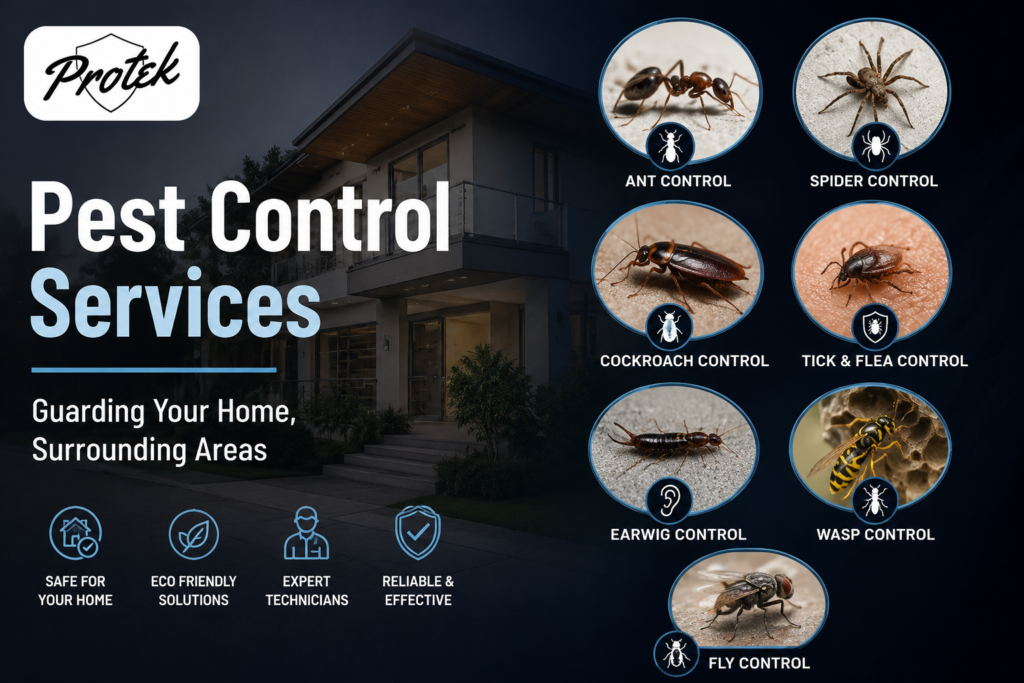
Florida homes face pest pressure throughout the year because warm temperatures, rainfall, humidity, irrigated lawns, and dense landscaping can support activity in every season. Ants, cockroaches, earwigs, flies, mosquitoes, rodents, snakes, spiders, ticks, fleas, wasps, and beetles may all take advantage of favorable conditions around a property.
Preventing a pest infestation requires more than reacting to a sighting indoors. The strongest approach combines moisture management, sanitation, exclusion, landscape care, monitoring, and professional inspection so small risks are addressed before they become recurring problems.

Control Moisture Before It Attracts More Pests
Moisture is one of the biggest drivers of pest activity in Florida. Heavy rain, leaking plumbing, damp mulch, clogged gutters, and overwatered landscapes can create reliable water sources close to the home.
Areas worth checking include:
- Gutters and containers that hold water after storms
- Irrigation zones that repeatedly soak foundation edges
- Leaking faucets, hoses, or plumbing fixtures
- Damp mulch and shaded vegetation near exterior walls
- Bathrooms, garages, and laundry areas with condensation
- Low-lying yard areas where water drains slowly
Mosquitoes can develop around standing water, while cockroaches, ants, earwigs, and other pests may move toward damp shelter. Practical summer prevention steps can help homeowners understand how rain, heat, and landscaping combine to increase seasonal pest pressure.
Correcting moisture problems makes the property less supportive of pests and helps other preventive measures work more effectively.
Seal Entry Points Before Pests Move Indoors
Florida homes contain many small openings that are easy to overlook. Gaps around doors, windows, garage seals, vents, utility lines, and foundations can give insects and rodents dependable routes inside.
Rodents may use larger structural openings, while ants, cockroaches, spiders, earwigs, and beetles can take advantage of much smaller gaps. Snakes may also appear where outdoor shelter or prey is available near the structure.
Exclusion works best when it is based on inspection rather than simply sealing every visible crack. A professional assessment can identify which openings show active pest movement and which areas are most likely to become future access points.
Preventive pest control becomes more precise when technicians connect entry routes with nearby food, moisture, and shelter conditions instead of treating indoor sightings as isolated events.
Keep Landscaping From Becoming Pest Shelter
Outdoor conditions often determine how much pest pressure reaches the structure. Thick vegetation, weeds, debris, shaded corners, and poorly managed lawn edges can provide shelter for insects and other pests before they move closer to doors and patios.
Helpful landscape priorities include:
- Trimming vegetation away from siding and roof edges
- Removing fallen leaves and unnecessary yard debris
- Keeping mulch from staying excessively wet near foundations
- Managing weeds that create dense ground-level cover
- Moving stored materials away from exterior walls
- Monitoring pet areas for ticks and fleas
Mosquitoes, ticks, fleas, spiders, wasps, ants, earwigs, and beetles may all benefit from outdoor harborage. Reducing those conditions does not replace treatment when activity is established, but it lowers the amount of shelter pests can use close to the home.
Use Year-Round Monitoring Instead Of Seasonal Guesswork
Florida does not have the same long pest-free winter experienced in colder climates. Rainy weeks, dry periods, warm evenings, lawn growth, and changing indoor conditions can shift activity throughout the year.
That makes year-round protection more practical than waiting for a pest infestation to become obvious. Regular monitoring gives technicians opportunities to notice new ant trails, cockroach activity, rodent evidence, mosquito breeding areas, wasp nesting, or other changes before they become harder to manage.
Consistency also creates a useful record of what has been found and treated. If activity returns, previous findings can help determine whether the same pressure point is involved or whether property conditions have changed.
This approach saves time because prevention can be adjusted as weather, landscaping, and structural conditions shift.
Build A Prevention Plan Around The Whole Property
Long-term protection works best when the home, yard, and surrounding conditions are treated as one connected system. Food, water, shelter, entry points, and seasonal activity can overlap, which is why a one-time response may not prevent the next problem.
A complete prevention plan may include:
- Inspecting interior and exterior areas for early warning signs
- Correcting moisture and drainage issues around the property
- Sealing confirmed entry points for insects and rodents
- Reducing food, clutter, and outdoor pest shelter
- Applying targeted treatment where activity is verified
- Scheduling follow-up as seasonal conditions change
Professional pest control adds value by helping identify which risks matter most for a property. A Palm Bay home near dense landscaping may face different pressure than a property with heavy irrigation, frequent standing water, or repeated rodent activity.
The goal is not to make the property impossible for pests to approach. It is to reduce the conditions that allow them to settle, reproduce, and move indoors. Preventive inspection and targeted follow-up make that process more efficient and help stop minor activity from becoming a larger infestation.
Keep Florida Pest Pressure From Taking Hold
If you want to reduce the risk of a pest infestation before it becomes disruptive, contact Protek Pest and Lawn for professional inspection, targeted pest control, and year-round prevention tailored to your property.